

Efficiency and optimization are essential for today’s business world because there is constant pressure on companies to find ways to increase productivity and eliminate manual processes. The use of automation tools becomes imperative for companies to simplify their operations and become more productive. With the help of automation, companies can optimize the workflow and achieve their desired outcomes. It helps them preserve resources and lower expenditures while concentrating on the tasks that will contribute to their growth. In this context, automation is used in business operations in several areas including project management and customer service.
Benefits of Automation in Business Operations
As mentioned above, the use of automation technologies may provide various advantages to a business. They include increased efficiency, savings, and high accuracy levels. The first advantage means that employees will be able to perform less boring tasks, which will result in increased job satisfaction and lower turnover rates. Another benefit is that errors and inaccuracies will be minimized, and data will be of higher quality. It will positively influence business decisions and help businesses perform better.
Another benefit of automation technologies is that it enables companies to operate faster and react to changes in the market. As the company grows, it faces many obstacles associated with a growing workload and bottlenecks. With the use of automation, businesses will be able to address these concerns and work efficiently. Moreover, it will help to improve communication between departments, facilitate collaboration, and operate quickly and effectively. It will positively affect competitiveness and let companies retain their place in the market.
Project Management Automation Tools
Project management is very important for businesses because it involves planning and implementation of various activities and tasks. Project management tools help automate this process and ensure its efficiency and effectiveness. Some examples of widely used project management automation tools are the following:
Asana

is a cloud-based tool, which helps people organize work by creating tasks, setting deadlines, and managing other aspects of work
Trello

is a visual tool for project management. Here you can organize your tasks and prioritize them based on their importance
Basecamp
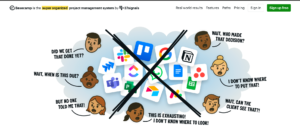
is a project management software that includes message boards, file storage, schedule sharing, and other useful features.
Thanks to the automation tools mentioned above, businesses will be able to focus on more important tasks, which involve planning and execution rather than routine management.
Customer Service Automation Tools
Another area of business where automation plays a significant role is customer service. Automation in this case is aimed at providing prompt and efficient responses to customer requests. The following tools can be considered examples of customer service automation:
Zendesk

is a cloud-based customer service tool that includes ticketing, chat, and phone features
Freshdesk

is an all-in-one solution for customers’ requests including ticketing, chat, and call center management
Drift

is a platform for conversations, which helps connect businesses and clients via chat, email, or phone.
With the use of these tools, businesses will be able to automate customer service and thus become more efficient and responsive to customer requests and concerns.
Financial Management Automation Tools
Another area in which automation helps businesses achieve great results is financial management. This type of automation contributes to increased accuracy and efficiency in financial management. Examples of popular automation tools in this area are the following:
QuickBooks
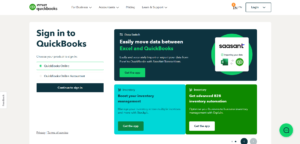
This is a cloud-based system, which offers users many financial management features. The key ones include invoicing, expense tracking, and financial reporting;
Xero

Is a cloud-based platform, which offers a complete set of financial management features, which include invoicing, expense tracking, and financial reporting;
Sage

Is another solution that focuses on accounting, invoicing, and financial reporting.
Thus, these solutions will help to simplify routine financial operations, which increases accuracy, reduces errors, and promotes transparency in the financial area.
Marketing Automation Tools
Marketing plays a huge role in the business because it deals with promotion and selling. To achieve greater efficiency and positive outcomes, businesses should use marketing automation tools. Examples of such tools are:
Marketo

this tool covers many aspects of marketing including lead generation, email marketing, and lead nurturing;
HubSpot

is a complex automation system that helps businesses perform not only marketing-related but also sales operations, which include lead generation, email marketing, and lead nurturing;
Pardot

is another great marketing automation tool that specializes in lead generation, email marketing, and nurturing.
Thus, with the help of the aforementioned tools, businesses will be able to simplify routine marketing procedures and increase their effectiveness.
Conclusion and Call to Action
To conclude, automation tools play an important role in business operations and allow companies to simplify business workflows and become more productive. Businesses need to implement automation technologies to simplify work, preserve resources, and improve performance.
Those who want to simplify business operations and increase efficiency are encouraged to consider automation as an effective way. Identify those parts of work, where automation will bring significant benefits and select the best solutions.