

In the current business environment, it is essential to stay competitive and outpace rivals. It can be achieved via workflow optimization and automation of routine operations. By using appropriate tools, one can increase efficiency, save time, and avoid mistakes. Workflow automation tools are designed to simplify and streamline business processes. Thus, a person can pay attention to other aspects, such as strategizing and decision-making.
Selecting Appropriate Workflow Automation Tools
It is crucial to select the right tools when trying to optimize business processes. Various automation tools have specific purposes and suit particular industries, businesses, and processes. Hence, one should choose the tools that will address his or her issues. There are numerous tools to automate business processes. Here are some of the best workflow automation tools to consider:
Zapier

This application allows integrating numerous apps, including Google Drive, Salesforce, and Mailchimp;
Automate.io

This platform helps automate tasks performed through multiple apps and websites;
Microsoft Power Automate
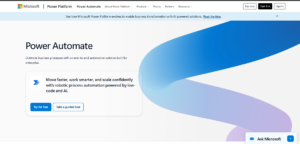
This tool supports Microsoft products, such as Office 365 and Dynamics 365.
Automation of Business Processes Using Workflow Automation Tools
One can automate numerous business processes using workflow automation tools. These processes include data collection, data analysis, task distribution, collaboration, and many others. Here are some business processes that one can automate using workflow automation tools:
– Customer onboarding: Welcome emails can be sent automatically, assignments can be made automatically, and customer accounts can be updated automatically
– Invoicing and payments: Workflow automation tools help generate and send invoices, process payments, and remind clients about pending bills
– Data entry and reporting: One can collect and enter data into different systems automatically and generate reports and dashboards.
Benefits of Workflow Automation Tools
Using workflow automation tools brings numerous benefits to organizations. For instance, workflow automation tools help employees become more productive since they eliminate routine operations. Workflow automation tools minimize the probability of making mistakes during manual operations, which increases the efficiency of completing tasks. Moreover, workflow automation tools encourage team members to collaborate and communicate, which positively affects the efficiency of business processes.
Implementation of Workflow Automation Tools
There are several steps that one should take while introducing workflow automation tools into a business process. First, one should identify the processes that can be optimized using workflow automation tools. Then, one should choose the right automation tools based on his or her needs and preferences. Finally, one should configure and test selected tools to ensure that they will meet organizational requirements.
Assessment of the Success of Workflow Automation Tools
It is crucial to measure the success of workflow automation tools to ensure that they contribute to meeting the needs of an organization. To measure the success of workflow automation tools, one can monitor several key performance indicators. These key performance indicators include time saved due to workflow automation, decreased number of errors, and increased productivity levels.
Maximization of the Benefits of Workflow Automation Tools
One can maximize the benefits of workflow automation tools if he or she takes some additional steps. Specifically, one should continuously monitor his or her workflows and try to optimize them. Moreover, one should ensure that employees receive adequate training and support. Furthermore, one should integrate workflow automation tools with other systems used in an organization.
Conclusion
There are various workflow automation tools that can be used to optimize processes and automate routine tasks. When choosing workflow automation tools, one should consider his or her business requirements. Several workflow automation tools can be recommended. These tools enable users to automate various business processes. Workflow automation tools bring several benefits to organizations. They can be easily implemented and assessed. They can be further maximized with the help of some recommendations.